UbiComp / ISWC 2026
Plenary Sessions
Plenary Sessions
UbiComp/ISWC 2026 is proud to host 5 plenary sessions comprising 3 keynote talks, a panel session, and an award talks session.
Keynote 1. 09:30-10:30 Tuesday 13 Oct, Ballroom II+III.
Host: Fan Wu
Tarek Abdelzaher
Abdelzaher received his Ph.D. form the University of Michigan in1999. He is presently a Sohaib and Sara Abbasi Professor of Computer Science and a Willett Faculty Scholar at the Siebel School of Computing and Data Science, the University of Illinois. He authored/co-authored over 450 refereed publications in Cyber-Physical Computing, Distributed Systems, IoT, and Edge AI, with an H-index of 101. He served as Editor-in-Chief of the Journal of Real-Time Systems for 15 years, and as an Associate Editor of multiple journals including IEEE TMC, IEEE TPDS, ACM ToSN, ACM TIoT, and ACM ToIT. He also served as General or Program Chair of several premier conferences in his field, including IEEE RTSS, ACM/IEEE Sensys, IEEE Infocom, IEEE ICDCS, IEEE RTAS, and ACM/IEEE SEC. He presently co-chairs the Steering Committee of ACM/IEEE Sensys, the International Conference on Embedded Artificial Intelligence and Sensing Systems. Abdelzaher received the IEEE Outstanding Technical Achievement and Leadership Award in Real-time Systems (2012), a Xerox Research Award (2011), and more than a dozen best paper awards, roughly averaging an award per year for the last 20 years. He is a fellow of IEEE and ACM.
The Micro Foundation Model Approach for Ubiquitous Computing
Recent breakthroughs in AI have demonstrated unprecedented capabilities of frontier models with billions and trillions of parameters. While well-suited for deeper computational reasoning and offline tasks, these models suffer escalating costs and a level of cloud dependence that is incompatible with the core vision of ubiquitous computing – a vision that espouses seamless integration of highly distributed, heterogenous computational and physical assets that possess individualized and diverse capabilities at the edge. Such a vision is more compatible with the exploitation of specialized experts, each optimized for an explicit application target. To support the ubiquitous computing vision, we thus revisit a largely overlooked point in the design space between traditional supervised learning and large language/vision models. We call it micro foundation models. Being specific to an application domain, these models are substantially smaller than their frontier counterparts. Nevertheless, they are pretrained with unlabeled data, and they show great robustness and adaptability to new environmental conditions, targets, and downstream tasks, both within the same application and across similar applications. They are capable of “system 1” functions (to borrow a term from psychology that divides thinking into fast and slow, labeled system 1 and 2, respectively). Importantly, they can execute at the edge on resource-limited devices ranging from embedded system boards, such as a Raspberry Pi, to low-power microcontrollers. The talk summarizes several years of experience designing, implementing, and testing components of micro foundation model training and inference pipelines, shedding light on their capabilities and limitations, while demonstrating example applications. Conclusions suggest that this lane of research deserves further community attention to support ubiquitous computing challenges that, we argue, are unique and distinct from those motivating mainstream AI advances.
Keynote 2. 11:00-12:00 Tuesday 13 Oct, Ballroom II+III.
Host: James Scott

Steve Hodges
Steve is a Distinguished Professor at Lancaster University where he creates new digital devices, tools and experiences that change what people do with technology. His work has received six lasting impact awards, including four at UbiComp, and has contributed directly to around 15 million devices with over 70 million users in 190 countries. Steve is a fellow of the ACM, the IEEE and the IET and a member of the ACM SIGCHI Academy. He has been awarded the IET Mountbatten Medal, the Queen Elizabeth Prize for Education and an honorary doctorate from Hasselt University.
From Prototyping to Isotyping: Scaling Hardware Research for Deeper Insight and Impact
Innovative hardware prototypes are a cornerstone of ubiquitous computing research, but relatively few result in devices with lasting impact. Drawing on several projects I’ve been involved in over the past 30 years, I observe that the most impactful ones often involve building not just one or two device prototypes, but tens or hundreds of copies. By deploying these with early adopters and sharing them with other researchers we can create communities of users who in turn generate richer research insights and drive deeper impact.
So why not routinely deploy new hardware at scale? Despite a wealth of modern platforms for device prototyping, building tens or hundreds of equal copies of a prototype — a process I call isotyping — remains remarkably hard. I’ll explain why this is, and illustrate opportunities for the mobile, wearable and ubiquitous computing research community to improve the situation. Just as prototyping tools have democratized device invention, I believe that isotyping tools have the potential to make building and deploying isotypes at scale a routine practice, providing researchers with an easier path to the insights that ultimately lead to lasting impact.
Keynote 3. 09:00-10:00 Wednesday 14 Oct, Ballroom II+III.
Host: Zhiwen Yu
Yunhao Liu
Yunhao Liu, ACM Fellow , IEEE Fellow, Chair Professor at Tsinghua University. He also served as the Dean of School of Software in Tsinghua, and the MSU Foundation Professor and the Chairperson of Department of Computer Science and Engineering in Michigan State University. Yunhao received Hong Kong ICT Best Innovation and Research Award Grand Prize 2007, Second Class National Natural Science Award 2011, ACM Presidential Award 2013, CCF Wang Xuan Award 2022, China Ministry of Education First Class Technological Innovation Award 2023, China Ministry of Education First Class Natural Science Award 2025, as well as many best paper awards including ACM MobiCom 2014 best paper award, ACM SenSys 2021 Best Paper Award, SIGCOMM 2021 Best Student Paper Award, and ACM SenSys 2023 Test of Time Award and IEEE PerCom 2026 Test of Time Award.
EIOT: Prediction in the loop and Practical Reason of Computation
Panel. 10:40-12:00 Wednesday 14 Oct, Ballroom II.
Title: Decade of Human-Centered Research at UbiComp: Looking Back, Looking Forward
Panelists
Jakob Bardram
Technical University of Denmark
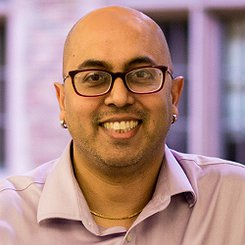
Anind Dey
University of Washington
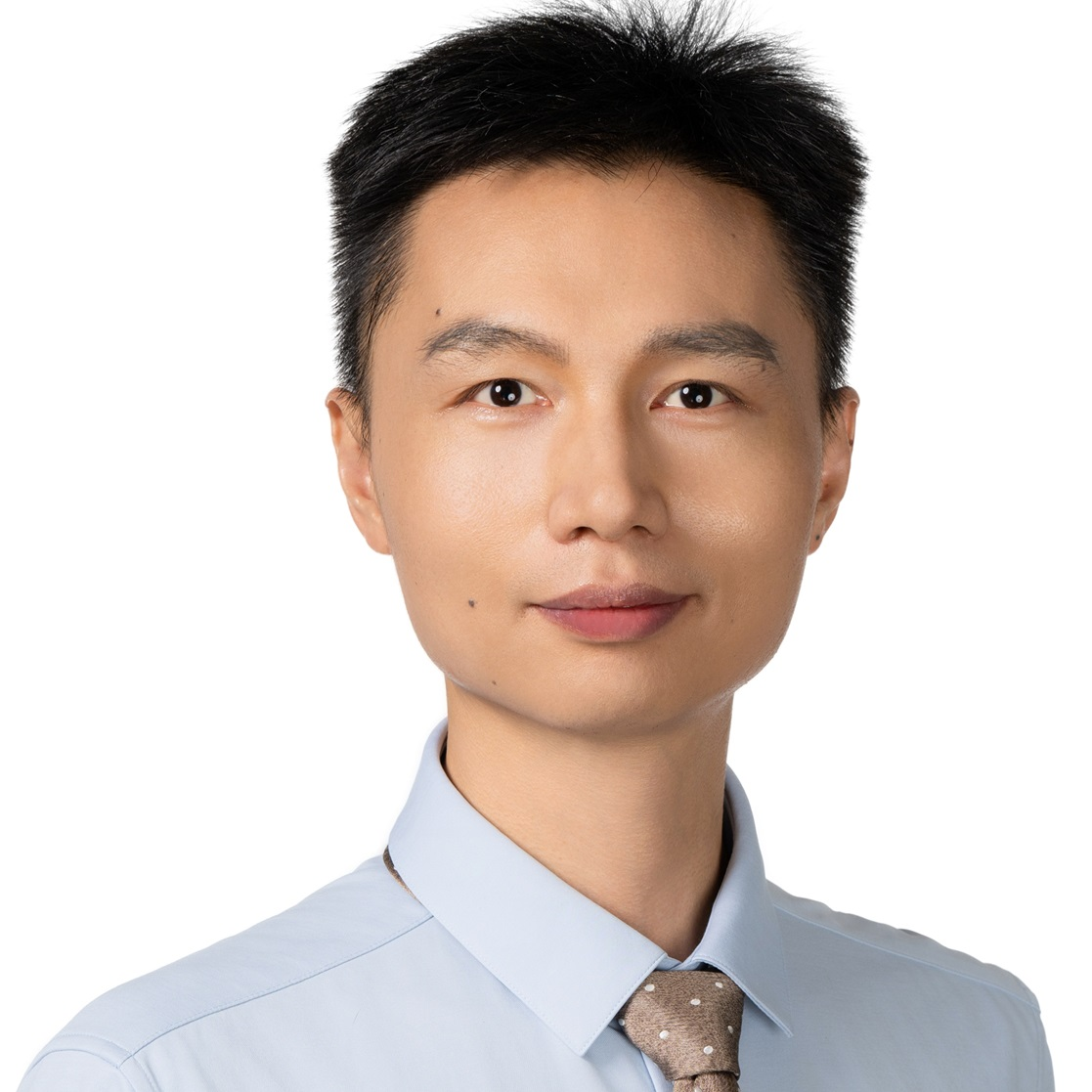
Mingming Fan
The Hong Kong University of Science and Technology (Guangzhou)
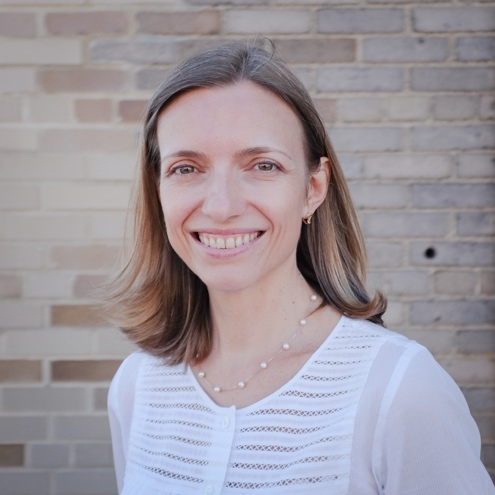
Lena Mamykina
Columbia University

Silvia Santini
Università della Svizzera italiana
Moderator

Eun Kyoung Choe
University of Maryland
10-Year Award Talks. 10:40-12:00 Wednesday 14 Oct, Ballroom III.
Speakers
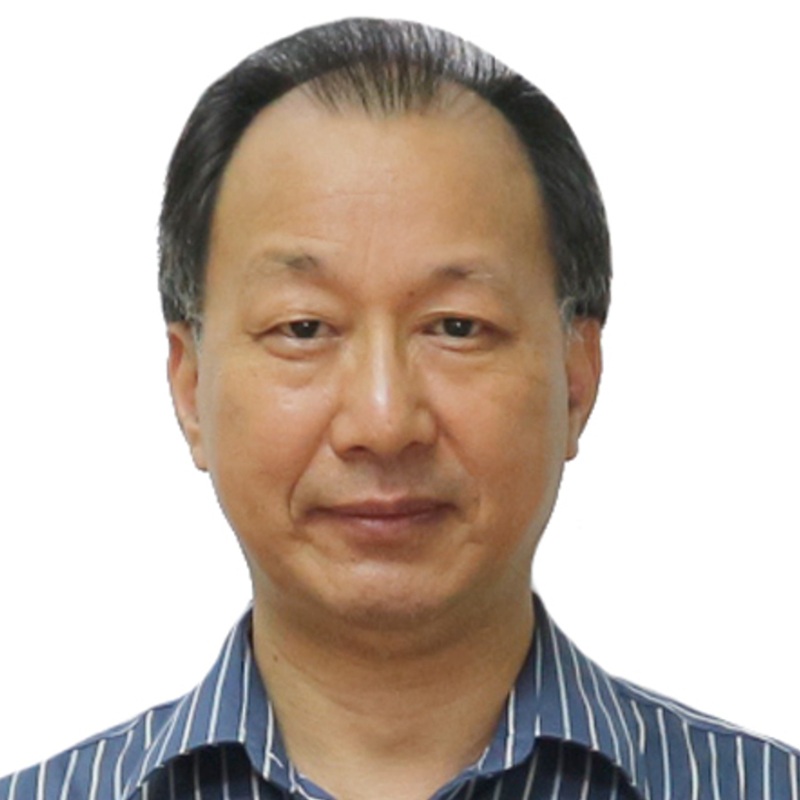
Daqing Zhang
IP Paris, FR/Peking University
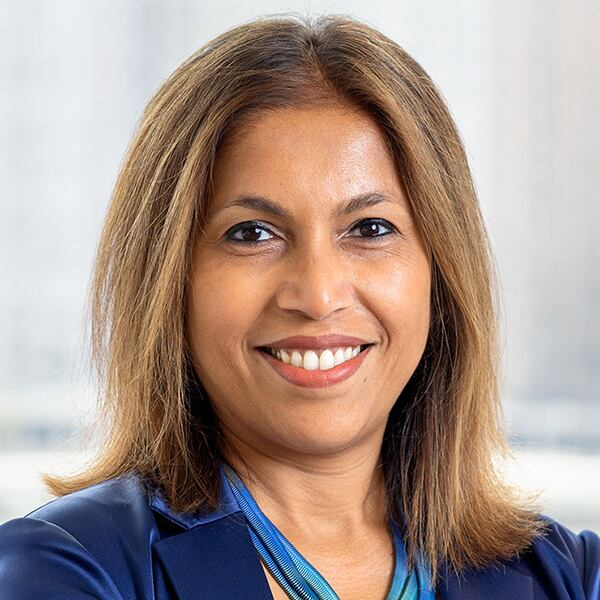
Tanzeem Choudhury
Cornell Tech
Moderator
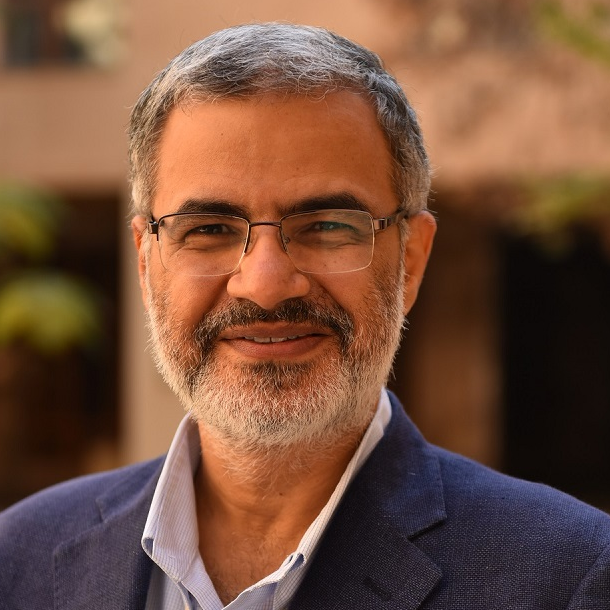
Moustafa Youssef
The American University in Cairo
About: The 10-Year Impact Award Talks highlight research from a decade ago that has continued to shape the field of ubiquitous computing. Talks by the award-winning and runner-up paper authors will be followed by a fireside chat on research impact, lessons learned, and insights.
| Time | Speaker | Details |
|---|---|---|
| 10:40–10:45 |
Moustafa Youssef (The American University in Cairo) |
Welcome & Introduction |
| 10:45–11:10 |
Daqing Zhang (IP Paris, FR / Peking University) |
Title: Fresnel Zone Models for Wireless Sensing: A Decade of Research and Reflection |
| 11:10–11:35 |
Tanzeem Choudhury (Cornell Tech) |
Title: CrossCheck: toward passive sensing and detection of mental health changes in people with schizophrenia |
| 11:35–12:00 | Fireside Chat | Theme: research impact, lessons learned, and insights |